
The following conversation is fictional but based on real discussions with neurodivergent individuals:
Them: I bought something I don’t need anymore, but I’m really anxious about returning it, and it’s been sitting in my car for weeks. I feel paralyzed. I wish I could just go to the store and do it. It shouldn’t be that hard.
Me: What makes it difficult for you?
Them: The parking lot is chaotic. Inside, I have to walk through the fragrance section, which is overwhelming. The music is loud, and the lights hurt my head. I get anxious at the returns counter, worried that the employee will judge me. Plus, I hate leaving empty-handed—what if the security guard stops me? And I might end up buying something just to avoid that feeling.
Me: Isn’t there a way to return it online? You could just box it up and have UPS pick it up from your house.
Them: Yeah, but I feel like I should just be able to handle going to the store. Everyone else can. What’s wrong with me?
Does this sound familiar? Are you frustrated that “simple” tasks make you feel anxious?
The Neurodivergent Brain
Every brain processes information in diverse ways. For neurodivergent brains, this often involves a deficit in the chemicals that signal relaxation, while at other times, it may result in an overactive fear response. Regardless of how your brain functions, it’s crucial to recognize that every brain is unique. Society often imposes expectations based on a conventional brain type, but there’s no moral value attached to how tasks are completed. Your brain isn’t “one-size-fits-all,” and your task execution shouldn’t be either.
Understanding Your Feelings about .. Feelings
Sometimes, how you feel about your feelings can be more overwhelming than the feelings themselves. Meta-emotion comprehension – how you feel about how you feel – can create a dangerous spiral. You avoid the task due to discomfort (sensory overload, anxiety, etc), and then think negatively about this discomfort. This spiral can create task paralysis – an inability to complete tasks due to “getting stuck”. If you often think that taking an alternate route to task completion is “unnecessary,” but have trouble following through, it might help to practice self-acceptance and find creative solutions.
Returning to Our Conversation
[Them: But I should just be able to handle going to the store. Everyone else can.]
… Me: We don’t really know if everyone else can. Many people dislike crowded, loud spaces. Let’s imagine you’re at the store looking for jeans. If they don’t have your size, you might think, “I should be able to fit into a size 10 skinny cut. Everyone else can. It’s what’s on the rack”. You find yourself squeezing into a pair of jeans that are uncomfortable and impractical for the way your body is sized.
Them: I wouldn’t put myself through that. I’d just go to a different store.
Me: Exactly! Now, think about the item you’re returning. If going to the store causes you unnecessary stress, is it necessary? You have options. Don’t make things harder for yourself—try returning the item from home.
Taking Action
To turn this anecdote into action, consider these steps:
- Identify what creates undesired stress and/or action paralysis in your life.
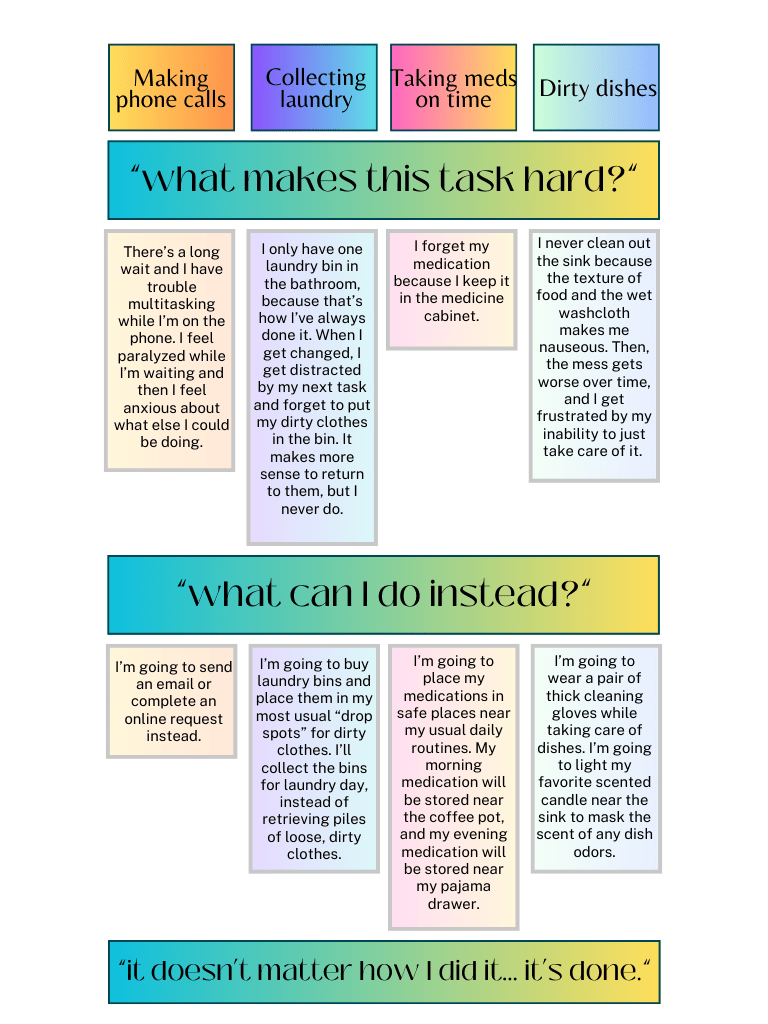
- Ask yourself: “What makes this task difficult? What can I do instead?”
- Remember: “It doesn’t matter how I did it; it’s done.”
Check out the chart below for examples.
______________
Disclaimer: This blog post is intended for informational purposes only and does not substitute professional therapy. If you or someone you know wants to work on self-acceptance and task execution, please reach out to a qualified mental health professional.
To explore ways I can support your journey with neurodivergence, or to schedule a free 15-minute consultation, visit Whippoorwill Counseling.






 Whippoorwill Counseling Writes
Leave a comment